
AutoSonix Unveils Acoustic Intelligence Architecture for Standardized Mechanical Signal Measurement
Proprietary AI technology transforms mechanical sound into repeatable, machine readable intelligence across vehicles,
Press Release Disclaimer: This is a press release distributed through the XPR Media network. It has not been independently verified by our newsroom.
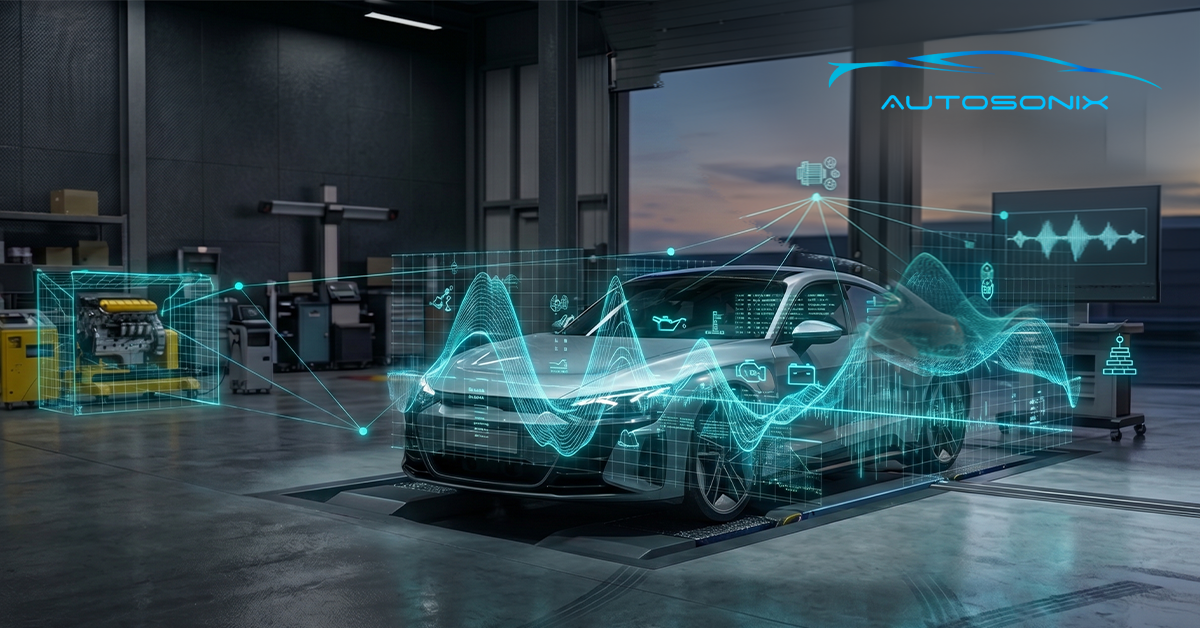

Proprietary AI technology transforms mechanical sound into repeatable, machine readable intelligence across vehicles, powertrains, and industrial applications
WHITEHALL, PA, UNITED STATES, September 29, 2026 /EINPresswire.com/ — AutoSonix, an automotive technology company specializing in acoustic intelligence, is advancing a new approach to mechanical measurement by transforming vehicle sound into a standardized, repeatable signal. The technology behind the company’s PTX™ platform is designed to measure acoustic information directly from the signal itself, creating an objective output without requiring a pre-recorded reference library for every make, model, or powertrain.
For decades, mechanical sound has been recognized as a source of valuable information. The challenge has been turning that information into a consistent measurement that can work across an industry where vehicle configurations, powertrains, operating environments, and production platforms continuously change.
AutoSonix has developed an applied AI architecture designed to address that challenge. Instead of relying on a comparison against a library of known sounds, the technology analyzes the acoustic signal itself and converts it into a standardized output.
That capability forms the foundation of PTX™, AutoSonix’s first commercial application of its broader acoustic intelligence platform.
From Sound to a Standardized Mechanical Signal
PTX™, Powertrain Signal Index, combines acoustic analysis with available OBD data and contextual vehicle data to generate a standardized mechanical signal at vehicle intake. The resulting PTX™ score provides a consistent starting point for vehicle-related decisions. It is designed as a signal and measurement framework rather than a final determination, giving automotive professionals an objective data point that can support additional review and decision-making.
One Methodology Across Multiple Powertrain Architectures
The AutoSonix architecture is designed to extend beyond conventional passenger vehicles.
The same fundamental methodology can be applied to combustion engines, where acoustic signals can be captured and converted into a standardized score without requiring a pre-existing reference library or matched baseline.
The technology can also be trained for electric motors and emerging powertrain architectures. Electric drivetrains produce distictive acoustic and vibrational signatures, including frequency components tht may be difficulat or impossible for people to perceive consistently These signals provide an additional source of information that can be captured and analyzed using acoustic intelligence.
This creates the potential for one measurement methodology to support multiple powertrain technologies and operating environments.
One methodology. One output format. Multiple powertrain architectures.
PTX™ as the First Application
While PTX™ is currently focused on creating a standardized mechanical signal for vehicle intake, AutoSonix describes it as the first application of a broader acoustic intelligence capability.
The underlying architecture can be trained and deployed for applications including:
• OEM engineering and NVH validation
• Manufacturing and component quality
• Fleet and equipment condition monitoring
• Electric powertrain and embedded acoustic intelligence
The platform is designed to support deployment across cloud environments, mobile devices, edge-capable sensors, embedded automotive computing platforms, and software-defined vehicle architectures.
Bringing Acoustic Intelligence From the Factory to the Field
AutoSonix is also extending its acoustic intelligence architecture into OEM engineering and manufacturing environments.
The company’s OEM and Engineering approach is designed to create continuity between R&D and NVH testing, manufacturing, end-of-line validation, vehicles in service, and engineering teams.
At manufacturing, AutoSonix can support the capture of a standardized acoustic baseline at vehicle build. Rather than limiting acoustic reference information to a sample of production vehicles, the approach is designed to create a broader signal record across production units.
When vehicles enter real-world operation, embedded acoustic intelligence can provide another source of information that can be connected back to engineering.
This creates what AutoSonix describes as a field-to-factory acoustic loop, allowing real-world acoustic information and R&D specifications to operate within a connected framework.
Designed for Edge Processing
A key component of the AutoSonix architecture is processing at the point where the vehicle is being evaluated.
The technology is designed to capture and process acoustic information without requiring an active internet connection for the initial inference process. This enables the signal to be generated close to the vehicle and supports use cases where speed, connectivity, and operational efficiency are important.
For OEMs, suppliers, fleets, and other organizations deploying acoustic intelligence at scale, edge-capable processing can provide a pathway toward embedded applications and distributed vehicle intelligence.
A Platform Built to Learn and Expand
AutoSonix’s applied AI model is trained using a proprietary dataset collected from real-world vehicles. The company’s architecture is designed to incorporate additional data and extend its measurement capabilities across new vehicle configurations, powertrain types, equipment classes, and operating environments.
The objective is not simply to create a larger sound library. Instead, AutoSonix is focused on creating a measurement methodology capable of producing a consistent output as the automotive industry evolves.
Every new vehicle, platform, and operating environment can contribute additional information to the broader intelligence layer.
From Automotive Vehicles to Industrial Equipment
The same acoustic measurement concept can extend beyond passenger vehicles.
AutoSonix identifies potential applications in heavy equipment, industrial machinery, component manufacturing, and other mechanical systems where sound can provide information about operating behavior.
For suppliers, the technology can support objective measurement of component sound at the point of manufacture. For industrial operators, it can provide a standardized acoustic baseline across equipment fleets.
The broader principle remains the same: if a mechanical system produces a measurable acoustic signal, that signal can potentially become machine-readable intelligence.
Building a New Measurement Layer
AutoSonix believes standardized mechanical signals can become an important layer of the automotive data ecosystem.
The automotive industry already relies on standardized systems for vehicle identification, onboard vehicle data, and financial decision-making. AutoSonix is focused on bringing a similar level of consistency to mechanical sound by creating a standardized, repeatable measurement.
PTX™ represents the company’s first application of this technology, providing an objective signal at vehicle intake that can follow the vehicle through different stages of the transaction and lifecycle.
From dealerships and auctions to fleets, warranty providers, OEMs, suppliers, and engineering teams, AutoSonix is building toward a common acoustic intelligence layer designed to make mechanical signals more measurable, repeatable, and usable.
“PTX™ is only the beginning,” Allen added. “The larger opportunity is creating a measurement layer that can move with the vehicle, from engineering to manufacturing and from the factory into the field. Once mechanical sound becomes a standardized signal, it can become part of the data infrastructure used to make decisions.”
For more information about AutoSonix, PTX™, and its acoustic intelligence technology, visit https://autosonix.ai.
About AutoSonix
AutoSonix is an automotive technology company focused on transforming mechanical sound into objective, machine-readable intelligence. Its proprietary acoustic intelligence architecture powers PTX™, a standardized intake signal designed to provide a consistent mechanical baseline across vehicle evaluations.
The company’s technology is designed for applications spanning vehicle intake, OEM engineering, NVH validation, manufacturing quality, fleet monitoring, component measurement, embedded vehicle intelligence, and emerging powertrain architectures.
AutoSonix is headquartered at 3848 Lehigh Street, Suite C, Whitehall, Pennsylvania 18052, USA.
Tom Allen
AutoSonix
+1 888-581-5142
email us here
Visit us on social media:
LinkedIn
Instagram
Facebook
YouTube
X
Legal Disclaimer:
EIN Presswire provides this news content “as is” without warranty of any kind. We do not accept any responsibility or liability
for the accuracy, content, images, videos, licenses, completeness, legality, or reliability of the information contained in this
article. If you have any complaints or copyright issues related to this article, kindly contact the author above.

Media gallery


