Johnson Auto Body Publishes Consumer Guide to Collision Damage Around the Trunk and Cargo Area
Knightdale, NC - September 23, 2026 - PRESSADVANTAGE - Johnson Auto Body has published consumer guidance focused on
Press Release Disclaimer: This is a press release distributed through the XPR Media network. It has not been independently verified by our newsroom.
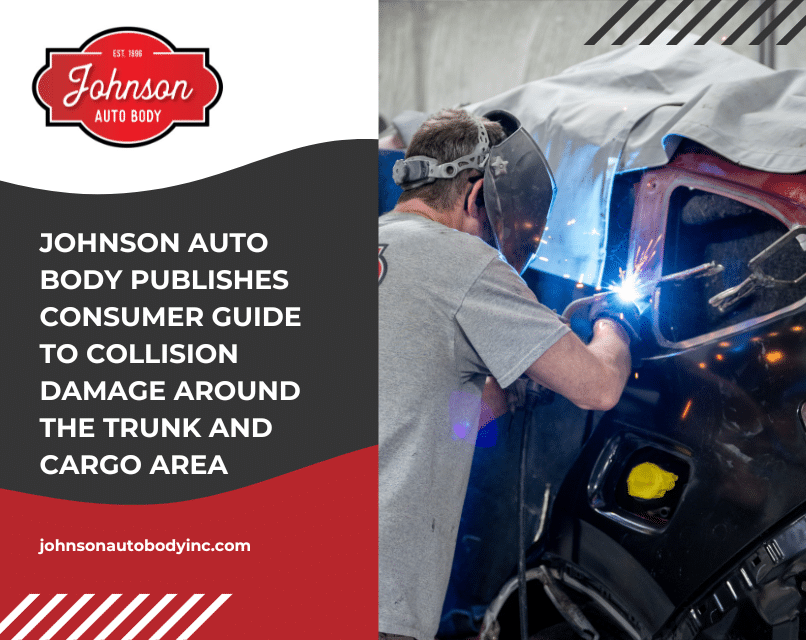

Knightdale, NC – September 23, 2026 – PRESSADVANTAGE –
Johnson Auto Body has published consumer guidance focused on collision damage around vehicle trunks and cargo areas. The September resource organizes rear-collision evaluation into four areas that may be relevant after an impact: trunk or liftgate operation, concealed cargo-area components, adjoining exterior panels and lighting, and vehicle technology located near the affected area.
The guidance expands on Johnson Auto Body’s collision repair information by addressing a specific limitation of exterior inspection. Damage around a rear bumper, trunk lid, liftgate, or quarter panel can be visible immediately, while other conditions may require access to the surrounding area before they can be documented.
The first part of the evaluation focuses on trunk or liftgate operation and fit. After a rear impact, changes can include difficulty opening or closing the component, inconsistent latching, altered panel gaps, or a lid or liftgate that no longer sits evenly within its opening.
These observations can help identify areas requiring inspection. The trunk lid or liftgate may be directly damaged, but its operation also depends on components such as hinges, latches, mounting points, and the surrounding body opening.
The second part of the guidance addresses the cargo area itself. Carpeting, liners, storage compartments, and interior trim can cover portions of the cargo floor and adjoining body areas. Depending on the vehicle, these spaces may also contain wiring, storage equipment, or other components.
When collision conditions indicate that additional access is needed, applicable trim or liners can be removed so technicians can inspect the affected area. Their removal is an access operation and does not, by itself, indicate that the interior components were damaged.
The guidance also identifies water intrusion as a condition that can become relevant when a collision affects the fit of a trunk, liftgate, adjoining panel, or sealing surface. Moisture, damp carpeting, or water marks appearing after an accident can provide information for evaluating weatherstripping, seams, and surrounding repaired areas.
Johnson Auto Body provides additional context about exterior panel evaluation and restoration through its auto body repair information.
The third area involves components adjoining the cargo opening. Rear-corner impacts can occur near quarter panels, taillights, bumpers, and other exterior parts. Changes in panel gaps, lamp position, or bumper alignment can help technicians determine which areas were involved in the collision.
Taillight assemblies illustrate this relationship. A rear impact can affect the lamp, its mounting points, wiring, or the body area supporting it. Evaluation therefore considers the condition of the components associated with the documented impact rather than whether the lamp continues to illuminate.
The cargo floor and body opening may also require closer evaluation when collision findings indicate possible changes in their position. Measurement can be incorporated when appropriate to determine the condition of relevant body areas. The need for measurement is based on the collision and documented findings rather than the appearance of the bumper cover alone.
The fourth part of the resource addresses vehicle technology. Depending on the model, components around the rear of a vehicle can include parking sensors, cameras, wiring, lighting systems, and other electronic equipment.
Their presence does not establish that a rear collision damaged them or that a particular diagnostic or calibration operation is automatically required. Repair planning instead identifies which equipment is installed, whether it is associated with the damaged area, and which vehicle-specific procedures apply to the work being performed.
This four-area framework is the primary focus of the September publication. It separates the evaluation of trunk or liftgate operation from inspection of concealed cargo areas, adjoining exterior components, and electronic equipment. The approach gives consumers a more specific explanation of why rear collision assessment may extend beyond a visibly damaged bumper.
It also provides context for changes between an initial estimate and a developed repair plan. An exterior inspection can document visible conditions, while appropriate disassembly can later provide access to areas covered by trim, liners, bumper components, or other parts. If additional accident-related conditions are identified, those findings can be incorporated into the repair documentation.
The resource further identifies several changes drivers can report during the evaluation process, including altered trunk or liftgate operation, new panel gaps, moisture in the cargo area, displaced trim, rear-area rattles, or warning messages that appeared after the collision. These observations do not establish a specific repair but can help identify areas for inspection.
The September guidance therefore distinguishes visible rear-body damage from the broader evaluation of the cargo area. Rather than assuming that limited bumper damage means the surrounding area is unaffected, or that substantial exterior damage establishes concealed damage, the repair plan can be developed from the conditions documented on the individual vehicle.
Additional information about the company’s local facility is available through Johnson Auto Body’s Knightdale location resource.
The central point of the September publication is that trunk and cargo-area collision evaluation involves several connected areas. Operation and alignment of the trunk or liftgate, concealed cargo-area components, adjoining body panels and lighting, and vehicle technology can each be evaluated when relevant to the documented impact.
Johnson Auto Body is a locally owned collision repair business founded in 1996. The company provides collision repair and auto body repair services for Knightdale, Raleigh, Wendell, and surrounding Wake County communities. Its facility is located at 821 H & R Drive, Knightdale, NC 27545.
###
For more information about Johnson Auto Body Inc, contact the company here:
Johnson Auto Body Inc
Todd McGee
(919) 217-2887
todd@johnsonautobodyinc.com
821 H and R Dr, Knightdale, NC 27545